Cross-Border Cybercrime
Response Program
A coordinated international civil-society response to cyber threats — working with governments, law enforcement, academia, and technology partners to prevent, detect, and respond to cybercrime.
From Awareness to Action: The Fake Call Centre Story
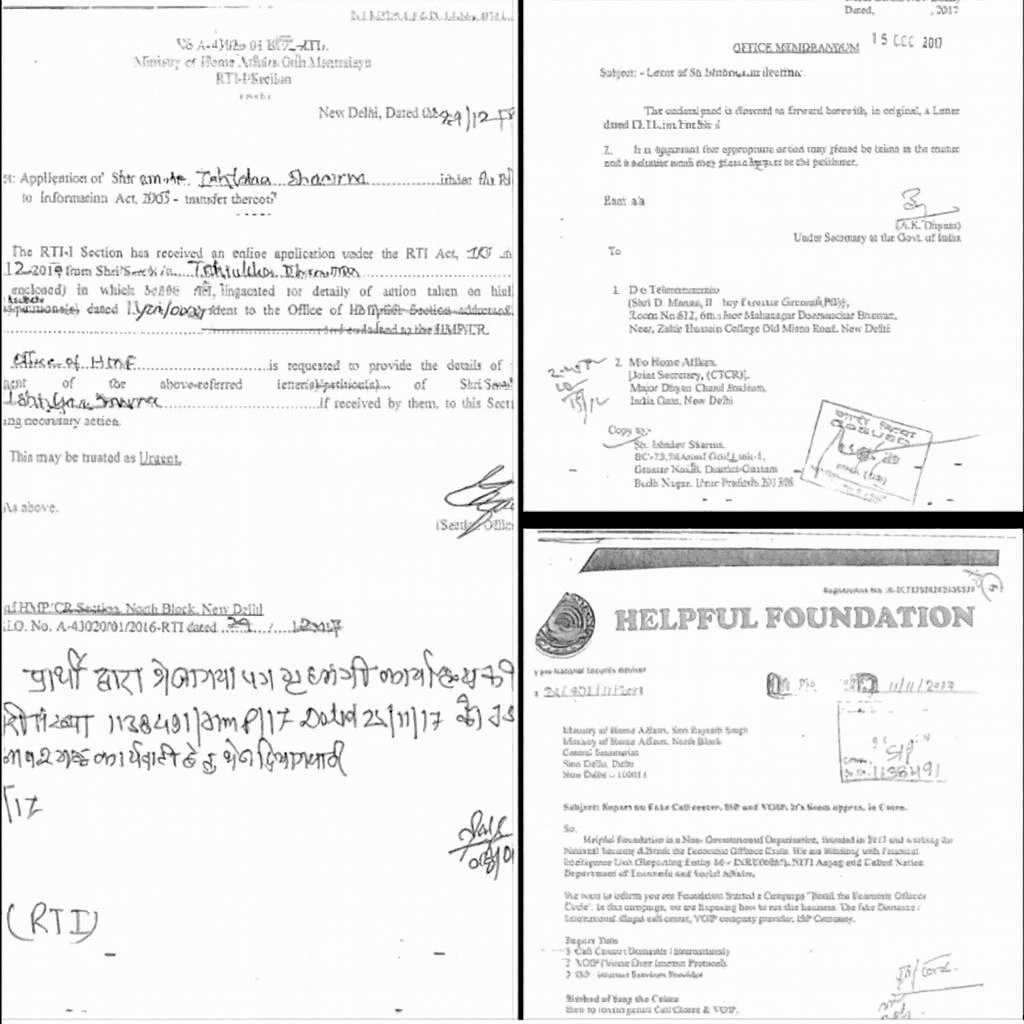
International fake call centres have operated in India since around 2004, cheating foreigners by misleading them. The Helpful Foundation’s initiative led to landmark enforcement action.
The Problem Emerges
International fake call centres begin operating across India, systematically cheating foreign citizens through misleading scams.
Foundation Takes Initiative
The matter comes to the Helpful Foundation’s notice. An International Cooperation Committee is constituted by Mr. Ishtdev Sharma, Chairman, for appropriate action.
Global & National Escalation
Written submissions sent to the President of America, Australian, Canadian & UK Governments and their principal investigative agencies — simultaneously to the Prime Minister of India, Ministry of Home Affairs, and DGP of State Police.
First Landmark Raid — Gurgaon
Conducted under the chairmanship of Haryana DGP Shri BS Sandhu, resulting in 500–600 people detained in a single day.
Sustained Enforcement Impact
Around 7,000–8,000 accused detained by Indian Government State Police, with appropriate action being taken continuously.
A Fast-Growing Global Threat
Why Cross-Border Cybercrime Response Matters
With the expansion of the digital world, cybercrime has become one of the fastest-growing global threats. Crimes such as identity theft, financial fraud, ransomware, hacking, terrorism financing, human trafficking, and misinformation campaigns often cross national borders, making them difficult to track and prosecute.
The Cross-Border Cybercrime Response Program (CBCRP) aims to create a coordinated, international civil-society response to cyber threats, working with governments, law enforcement, academia, and technology partners to improve awareness, prevention, and cooperation in combating cybercrime.
Five Pillars of the Program
Digital Literacy
Build awareness and digital literacy to prevent cybercrime.
Cross-Border Cooperation
Strengthen cooperation between civil society, law enforcement, and global institutions.
Capacity Building
Provide capacity building for youth, NGOs, and professionals in cyber safety.
Policy Advocacy
Advocate for stronger cybersecurity policies and global legal frameworks.
Rapid Response
Create rapid-response channels for reporting and addressing cybercrime cases.
Four Strategic Focus Areas
Awareness & Education
- Digital literacy campaigns for students, women, and vulnerable groups.
- Workshops on safe internet use, cyber hygiene, and fraud prevention.
- Awareness content in local languages.
Capacity Building & Training
- Training programs for NGOs, journalists, and activists on cyber safety.
- Technical skill-building for youth on ethical hacking, cybersecurity, and digital forensics.
- Simulation exercises for cross-border cybercrime case studies.
International Cooperation
- Partnerships with Interpol, UNODC, ITU, and CERTs worldwide.
- Cross-border dialogues and joint forums on cybercrime prevention.
- Advocacy for treaties and policies on cybercrime prosecution and evidence sharing.
Response & Policy Advocacy
- Establish a Cybercrime Response Network (CRN) for reporting cases.
- Policy briefs on international cybercrime laws and digital rights.
- Advocacy for global cooperation on ransomware and online trafficking.
Three-Phase Roadmap
Foundation
Research, partnerships, awareness campaign launch.
Expansion
Training, cross-border dialogues, pilot response network.
Consolidation
International conference, policy advocacy, expansion of response systems.
Flagship Actions
National Cyber Safety Awareness Drive.
Creation of a 24/7 Online Reporting Portal for cybercrime victims.
Annual Cross-Border Cybercrime Conference.
Youth Cybersecurity Fellowship Program.
Research & publication of Cybercrime Status Report.
Who We Protect & Empower
Youth & Students
NGOs & Civil Society Activists
Policymakers & Law Enforcement
Journalists & Media Professionals
Vulnerable Communities (Women, Elderly, Rural)
Proposed Budget Breakdown
| Component | Estimated Cost (INR) |
|---|---|
| Awareness & Education Campaigns | ₹35,00,000 |
| Capacity Building & Training | ₹30,00,000 |
| Reporting Portal & Technology | ₹25,00,000 |
| International Forums & Cooperation | ₹25,00,000 |
| Research & Policy Advocacy | ₹20,00,000 |
| Administration & Staff | ₹10,00,000 |
| Monitoring & Evaluation | ₹5,00,000 |
| TOTAL | ₹1,50,00,000 (Approx. $180,000 USD) |
Measurable Impact on Digital Safety
Strengthened digital literacy across target communities.
Cross-border cybercrime response network established.
Increased reporting and response mechanisms for victims.
Stronger international collaboration on policy and enforcement.
Skilled youth leaders trained in cybersecurity and digital safety.
Accountability & Long-Term Impact
📈 Monitoring & Evaluation
- Cybercrime case reports collected via portal.
- Beneficiary surveys on awareness improvement.
- Annual evaluation of cross-border cooperation outcomes.
- Independent external evaluation at project close.
♻️ Sustainability Plan
- Partnership with tech companies (Google, Microsoft, Meta, etc.) for CSR support.
- Collaboration with law enforcement agencies and CERT-In.
- Development of a permanent Cybercrime Response Centre.
- Continued youth fellowships and training networks.
This project positions your foundation as a civil society leader in the global fight against cybercrime — linking digital safety, human rights, and international cooperation.
Help Fight Cross-Border Cybercrime
Support the Helpful Foundation’s Cross-Border Cybercrime Response Program — awareness, training, a 24/7 reporting portal, and international cooperation for a safer digital world.
💛 DONATE NOW🔐 Helpful Foundation – Document Policy
Helpful Foundation uploads select documents to demonstrate transparency and accountability in our work for citizens and the public. However, due to security considerations, we do not upload or publicly share sensitive documents, especially those related to ongoing cases or international matters. Such information is safeguarded and managed responsibly to ensure the safety, confidentiality, and integrity of our operations.