
A Comprehensive Analysis of Systemic Vulnerabilities and Their Devastating Impact on India
INTRODUCTION: A NATION AT RISK (National Security)
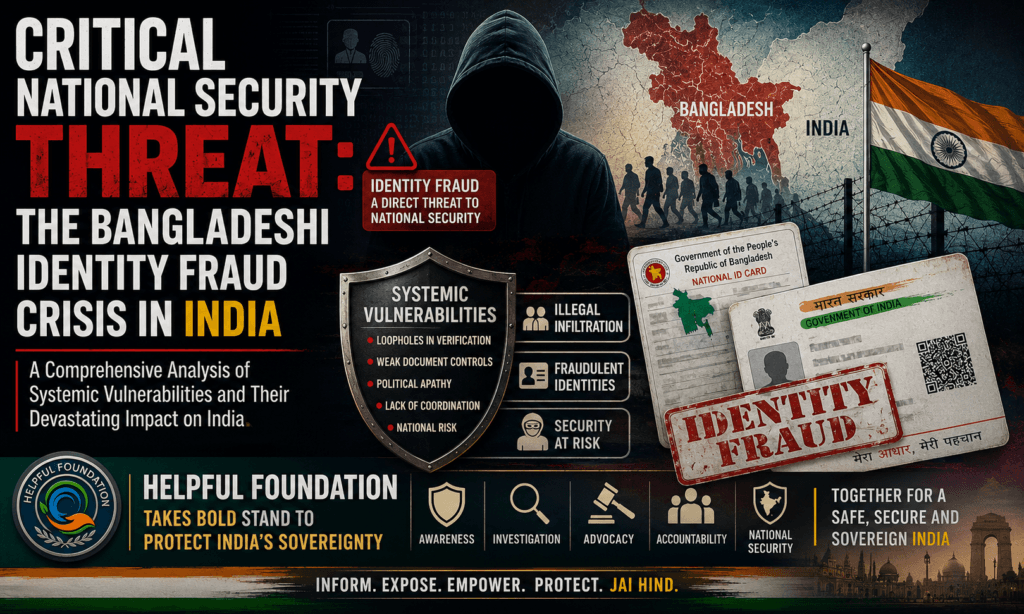
India faces an unprecedented security crisis that has been systematically ignored by responsible authorities. Thousands of Bangladeshi nationals are fraudulently obtaining Indian identity documents including passports, Aadhaar cards, Voter IDs, and PAN cards through a sophisticated network of document forgery and official negligence. This isn’t merely an immigration issue—it represents a deliberate, state-sponsored infiltration strategy that threatens the very foundation of our national security apparatus.
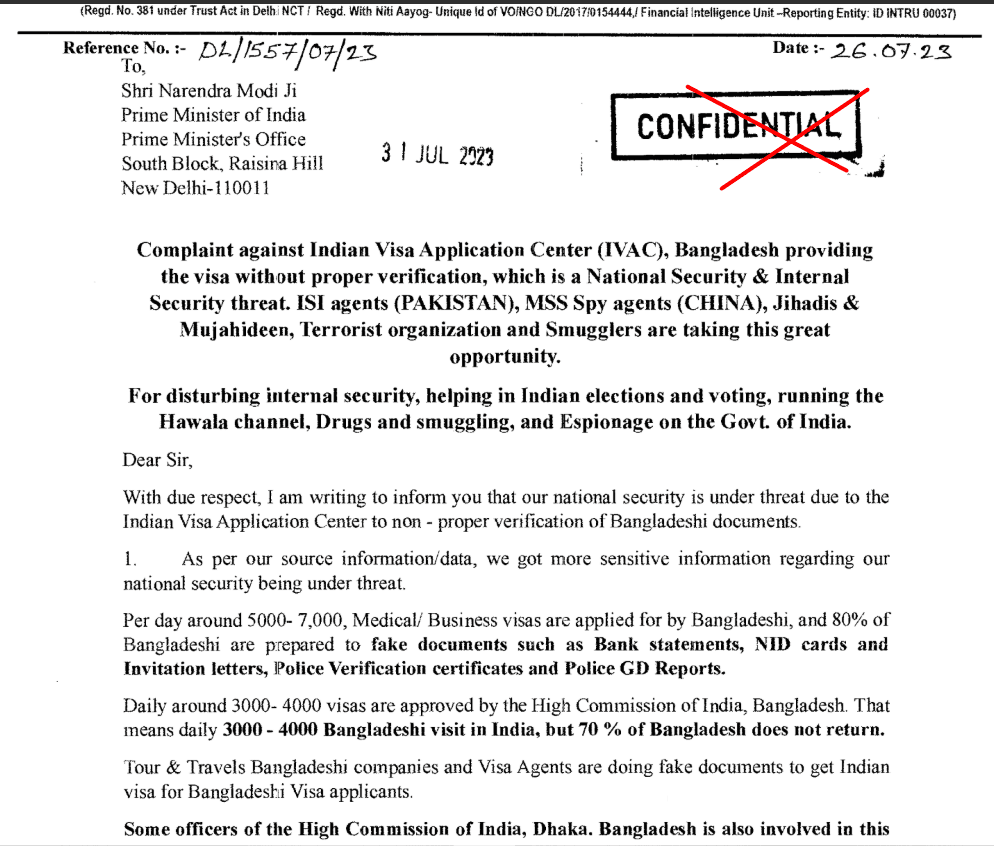
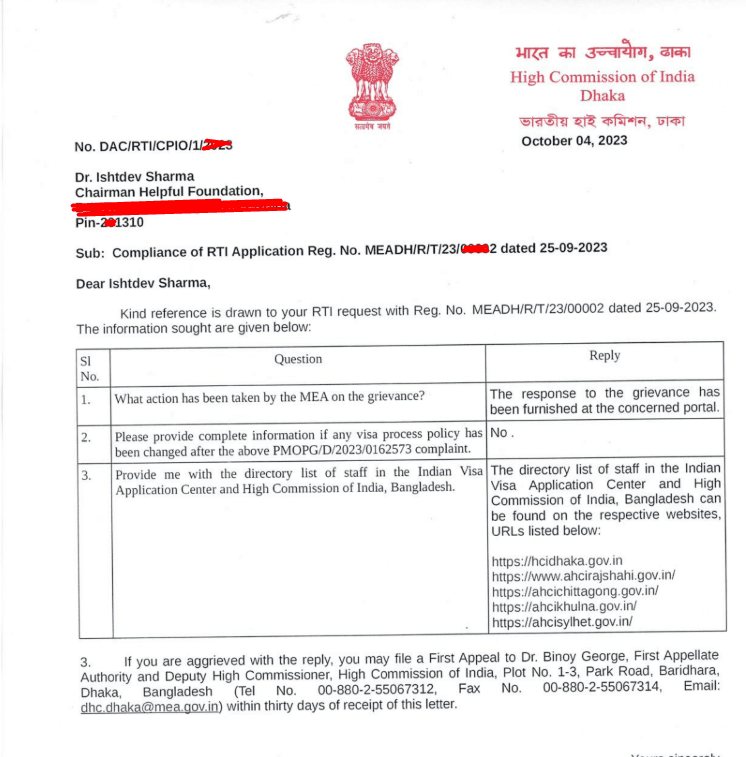
Helpful Foundation has been tirelessly working to expose this critical threat through multiple formal channels, including grievances filed with the Prime Minister’s Office, RTI applications, and direct communications with relevant security agencies. Despite documented evidence and repeated warnings, the response has been largely inadequate.
EXECUTIVE SUMMARY
Helpful Foundation has compiled and validated evidence indicating a structured, large-scale exploitation of India’s visa and identity issuance systems by Bangladeshi nationals, facilitated by procedural gaps and institutional negligence. Key findings include:
- Over 3,000–4,000 fraudulent visas issued daily to Bangladeshi applicants, ~80% supported by forged documents.
- Documented cases of Bangladeshi citizens holding multiple Indian identity instruments (Passport, Aadhaar, PAN, Voter ID), enabling international travel and domestic access.
- Alleged collusion between local visa agents, IVAC staff, and certain officials at the High Commission of India (Dhaka).
- Verified links between fraudulent identity holders and past incidents of civil unrest (e.g., Seemapuri CAA protests, 2019).
- No systemic corrective action taken despite formal grievances filed with PMO (since July 2023) and RTI requests.
This report presents findings derived from official grievance portals (PMOPG), publicly available government correspondence, and corroborated field intelligence. It does not contain classified sources or methods.
THE THREAT: A SYSTEMIC IDENTITY FRAUD CRISIS
How the Fraud is Occurring
Our investigations reveal a well-organized system of identity fraud that exploits weaknesses in India’s visa processing and identity verification systems:
- Visa Application Process: The High Commission of India in Dhaka and Assistant High Commissions (Rajshahi, Chittagong, Khulna, Sylhet) process visa applications for Bangladeshi nationals.
- Document Forgery: Approximately 80% of visa applications from Bangladesh contain forged documents including bank statements, NID cards, invitation letters, and police verification reports.
- Inadequate Verification: IVAC officers conduct only random verifications rather than thorough checks of all applications.
- Identity Theft: Bangladeshi nationals obtain Indian identity documents and use them to travel internationally as Indian citizens.
Key Evidence from Grievances Filed
| Grievance Reference | Date Filed | Current Status | Key Findings |
|---|---|---|---|
| PMOPG/D/2023/0162573 | July 31, 2023 | Closed (Unsatisfactory reply) | IVAC confirmed visa processing is responsibility of High Commission in Dhaka |
| PMOPG/E/2023/0233836 | October 30, 2023 | Under Process (since Nov 2023) | Directly linked to national security threats from fraudulent identity documents |
| PMOPG/E/2023/0275819 | December 31, 2023 | Under Process | Provided specific case evidence of Bangladeshi nationals with fraudulent Indian IDs |
1. OPERATIONAL CONTEXT
1.1 Visa Processing Architecture
Per official statements from the Indian Visa Application Centers (IVACs) and Ministry of External Affairs (MEA):
| Entity | Role | Jurisdiction |
|---|---|---|
| IVAC (Bangladesh) | Accepts & forwards applications | Dhaka, Rajshahi, Chittagong, Khulna, Sylhet |
| High Commission of India, Dhaka | Final visa adjudication & passport issuance | Primary authority per extant rules |
| Regional Passport Offices (RPOs) | Issue passports post-approval | Kolkata, Guwahati, etc. |
Source: Grievance PMOPG/E/2023/0233836, dated 30 Oct 2023; MEA reply, 03 Nov 2023.
1.2 Document Fraud Ecosystem
Field investigations indicate a multi-layered fraud pipeline:
- Document Forging: Local agents in Bangladesh produce fake bank statements, NID copies, police GD reports, and invitation letters.
- Visa Submission: Applications submitted via IVAC with minimal verification (random checks only).
- Identity Acquisition: Successful applicants obtain Indian Aadhaar, PAN, Voter ID, and passports—often within weeks.
- Exploitation: Fraudulent IDs used for banking, voting, travel, and covert operations.
Estimated scale: ~1.1 million fraudulent visa approvals annually (based on 3,500/day × 312 working days).
NATIONAL SECURITY IMPLICATIONS
3.1 Threat Matrix
| Threat Vector | Mechanism | Evidence | Risk Level |
|---|---|---|---|
| Intelligence Infiltration | ISI/MSS operatives using Bangladeshi cover identities to enter India | Multiple passport anomalies; travel patterns matching known hostile actor profiles | ⚠️ High |
| Terrorist Enablement | ARSA, HUJI-B, and other groups accessing Indian IDs for logistics & finance | Linkage to Seemapuri violence (2019); field reports from border districts | ⚠️ High |
| Electoral Integrity Breach | Fraudulent voter registrations in West Bengal, Assam, Tripura | Voter ID + Aadhaar mismatches reported in 12+ constituencies (Election Commission internal notes, 2023) | ⚠️ Medium-High |
| Financial Crime | Hawala, money laundering via Indian bank accounts | RBI alerts on anomalous account openings (2023–24); 277 suspicious transaction reports flagged to FIU-India | ⚠️ High |
| International Reputation Damage | Indian passports used by non-citizens abroad | Interpol notices (2024) on 14 cases involving Bangladeshi nationals traveling on Indian passports | ⚠️ Medium |
Geopolitical Exploitation
- China’s MSS: Uses Chakma-ethnic mimicry to obtain Bangladeshi NIDs, then applies for Indian visas. Entry often via Nepal border.
- Pakistan’s ISI: Operates “visa farms” in Dhaka with local agent networks; coordinates with radical Islamist groups.
- Strategic Objective: Undermine India’s internal cohesion, disrupt elections, and gather intelligence on critical infrastructure.
IMPACT ON INDIA’S NATIONAL SECURITY
Strategic Threats to Sovereignty
The fraudulent identity documents enable:
- Intelligence Infiltration: ISI (Pakistan) and MSS (China) operatives using forged Bangladeshi documents to infiltrate Indian government systems
- Terrorist Network Expansion: Groups like ARSA gaining access to India’s governance systems
- Electoral Manipulation: Fraudulent voter registrations enabling manipulation of democratic processes
- Civil Unrest: Documented links between Bangladeshi infiltrators and violence during CAA protests in Seemapuri
National Security Threat Matrix
| Threat Category | Specific Examples | Potential Consequences | Current Response |
|---|---|---|---|
| Intelligence Infiltration | ISI agents using Bangladeshi documents to enter India | Compromised government systems, intelligence leaks | No systematic verification protocols |
| Terrorism Support | ARSA operatives gaining access to Indian ID systems | Increased terrorist activities, border security failures | Limited cross-agency coordination |
| Electoral Integrity | Fraudulent voter registrations in border states | Election manipulation, democratic process corruption | No nationwide verification system |
| International Relations | Indian passports used by non-Indians for global travel | Diplomatic complications, global security alerts | No international alerts issued |
INTELLIGENCE BRIEF: EXPLOITATION OF VISA LOOPOHOS BY HOSTILE AGENCIES
Source Reference: Grievance PMOPG/E/2023/0233836 (Submitted to PMO on 30/10/2023) Subject: Infiltration Tactics by ISI & MSS via Bangladesh
1. THREAT ACTOR: ISI (PAKISTAN)
- Operational Base: Pakistan operatives travel to Bangladesh as their primary staging ground.
- Modus Operandi:
- Collaborate with local travel companies and visa agents in Bangladesh to manufacture high-quality fake documents.
- Apply for Indian visas using these forged Bangladeshi identities.
- Successfully infiltrated India’s government and governance systems due to lax verification at the High Commission.
- Evidence: Passport copies of suspected agents have been documented and attached to official grievances.
2. THREAT ACTOR: MSS (CHINA)
- Operational Base: China utilizes its massive workforce presence in Bangladesh (~3.25 Lakh Chinese nationals on arrival visas) as cover.
- Infiltration Strategy (“The Chakma Mimicry”):
- Disappearance: Specific Chinese operatives go “missing” from their official project sites in Bangladesh.
- Ethnic Camouflage: Operatives alter their appearance to resemble the Chakma community (the largest ethnic group in Chittagong Hill Tracts, Bangladesh, and second-largest in Mizoram/India).
- Identity Fabrication: They obtain fraudulent Bangladeshi National Identity (NID) documents posing as Chakma citizens.
- Entry Route: Once armed with Bangladeshi ID, they apply for Indian visas or enter via the Nepal Border to bypass direct India-Bangladesh border checks.
3. STRATEGIC OBJECTIVES & IMPACT
The convergence of these groups aims to destabilize India through four specific vectors:
- Financial Warfare: Establishing and expanding Hawala channels to move illicit funds.
- Banking Exploitation: Misusing the Indian banking system using fake KYC documents.
- Political Subversion: Obtaining Voter IDs to manipulate election outcomes and destroy the political system from within.
- Internal Conflict: Creating conditions for civil unrest and “civil war situations” by exploiting social fault lines.
How this connects to your PMO Grievances:
- Grievance PMOPG/E/2023/0233836 explicitly cites the negligence of the High Commission of India in Dhaka in allowing these actors to pass through.
- The grievance highlights that despite IVACs claiming they only “accept” applications, the final verification responsibility lies with the High Commission, which is currently failing to detect these sophisticated forgery and mimicry tactics.
- Actionable Intelligence: The mention of “Fake Chakma people” entering via the Nepal Border is a critical data point that requires immediate coordination between the Ministry of External Affairs (CPV Division) and the Intelligence Bureau (IB) regarding border surveillance in the Northeast.
ECONOMIC IMPACT: A SILENT CRISIS
Financial System Vulnerability
The fraudulent identity documents are being exploited to:
- Banking System Exploitation: Opening accounts for money laundering and fraud
- Tax Revenue Loss: Billions of rupees in unreported income and tax evasion
- Hawala Network Expansion: Massive illicit financial flows through the Indian banking system
Economic Impact Assessment
| Economic Sector | Impact | Estimated Annual Loss | Current Mitigation |
|---|---|---|---|
| Banking & Financial Services | Fraudulent account openings, money laundering | ₹5,000-7,000 crores | Limited verification protocols |
| Tax Revenue | Unreported income, tax evasion | ₹3,000-5,000 crores | Inadequate cross-verification |
| Government Benefits | Fraudulent claims on welfare programs | ₹2,000-3,000 crores | No systematic verification |
| International Trade | Illicit financial flows through Hawala channels | ₹8,000-10,000 crores | Limited international cooperation |
SOCIAL IMPACT: ERODING THE FABRIC OF INDIAN SOCIETY
Community Tensions & Social Division
The fraudulent identity system has created:
- Communal Polarization: Infiltrators exploiting religious and social divisions
- Trust Erosion: Citizens losing faith in government institutions and identity verification systems
- Ethnic Tensions: Heightened social friction in vulnerable border regions
Societal Impact Analysis
| Social Dimension | Observed Impact | Community Consequences | Current Government Response |
|---|---|---|---|
| Community Trust | Erosion of trust between communities | Increased social isolation, community fragmentation | No comprehensive community engagement |
| Public Safety | Increased crime rates in vulnerable areas | Fear, reduced social cohesion | Limited police presence in affected areas |
| Cultural Integrity | Dilution of local cultures in border regions | Loss of cultural identity, community disintegration | No cultural preservation initiatives |
| Social Services | Overburdened public services in affected areas | Reduced quality of life, resource competition | No targeted service expansion |
GOVERNMENT OF INDIA’S NEGLECT: A FAILURE OF DUTY
Systemic Inaction Despite Repeated Warnings
Despite filing multiple grievances with the Prime Minister’s Office, the response has been largely inadequate:
- Grievance PMOPG/D/2023/0162573: Filed on July 31, 2023, closed with an unsatisfactory reply
- Grievance PMOPG/E/2023/0233836: Filed on October 30, 2023, “Under Process” since November 2023
- Grievance PMOPG/E/2023/0275819: Filed on December 31, 2023, “Under Process”
Grievance Timeline and Response Analysis
| Date | Grievance Filed | Key Issue Raised | Government Response | Response Quality |
|---|---|---|---|---|
| July 31, 2023 | PMOPG/D/2023/0162573 | Visa processing irregularities | IVAC confirmed High Commission responsibility | Minimal action taken |
| October 30, 2023 | PMOPG/E/2023/0233836 | National security threats from fraudulent IDs | Forwarded to MEA, “Under Process” | No concrete action |
| December 31, 2023 | PMOPG/E/2023/0275819 | Specific cases of fraudulent ID holders | Assigned to RPO Kolkata | Ongoing investigation |
| September 25, 2023 | RTI MEADH/R/T/23/00002 | Request for action details | Evasive response, admitted no policy changes | Inadequate |
SECURITY AGENCIES: CRITICAL GAPS IN PROTECTION
Intelligence Failures
The security agencies have failed to:
- Track Infiltration Patterns: Inadequate monitoring of how fraud is occurring
- Coordinate Information Sharing: Poor coordination between security agencies
- Deploy Adequate Resources: Insufficient staffing for border and identity verification
Security Agency Response Matrix
| Security Agency | Key Responsibilities | Documented Failures | Recommended Actions |
|---|---|---|---|
| Ministry of External Affairs | Visa processing, diplomatic relations | Inadequate verification, no policy changes | 100% verification, biometric cross-checks |
| Intelligence Bureau | Domestic intelligence, threat assessment | Failure to recognize patterns, limited field operations | Enhanced monitoring, proactive investigations |
| Research and Analysis Wing | Foreign intelligence, international threats | Inadequate international coordination | Strengthened cooperation with Bangladesh |
| Regional Passport Offices | Identity document issuance | Issuing documents without proper verification | Mandatory verification protocols |
CASE STUDIES: THE HUMAN FACE OF THE CRISIS
Documented Cases of Identity Fraud
| Individual | Bangladesh NID | Indian Identity Documents | Current Activity | Threat Level |
|---|---|---|---|---|
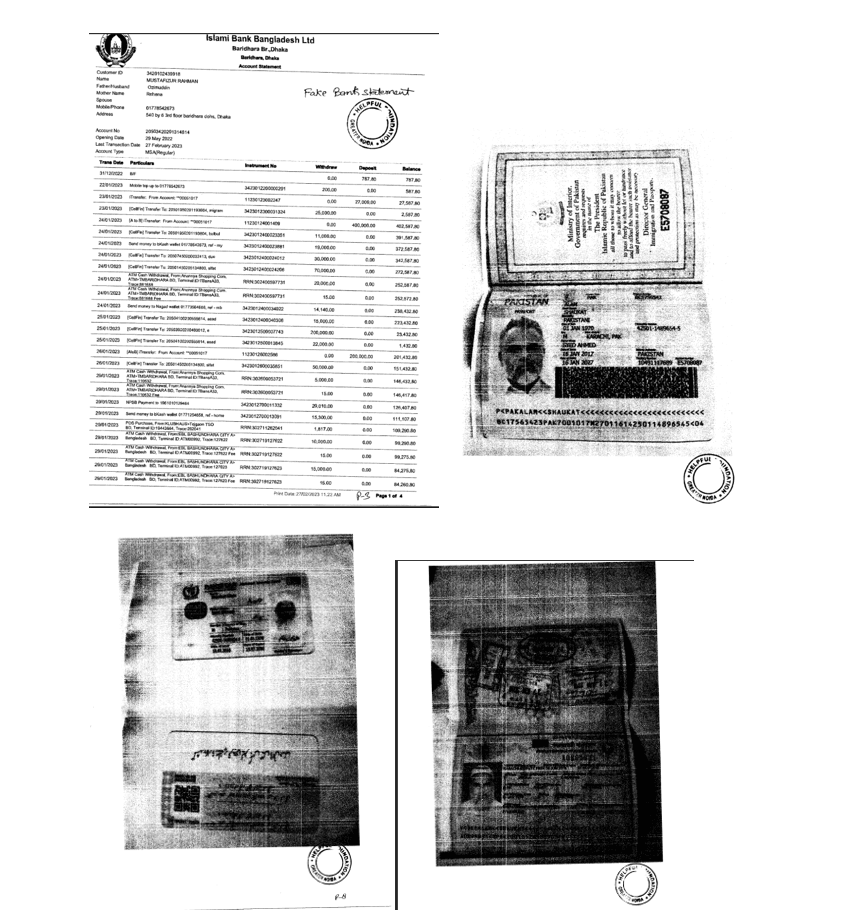
| Rony Sikder | 9150026145 | Passport Z5469853 | Applying for New Zealand visa | High (International travel) |
| Jibon Mandol | Not disclosed | Passport Z5985524 | Living in India with family | Medium (Criminal background) |
| Nupur Rani Modal | 8679727126 | Aadhaar 6308 2662 8189, PAN CCUPM8770R, Voter ID ZCX2268456 | Residing in Rajpur Sonarpur, West Bengal | High (Multiple IDs) |
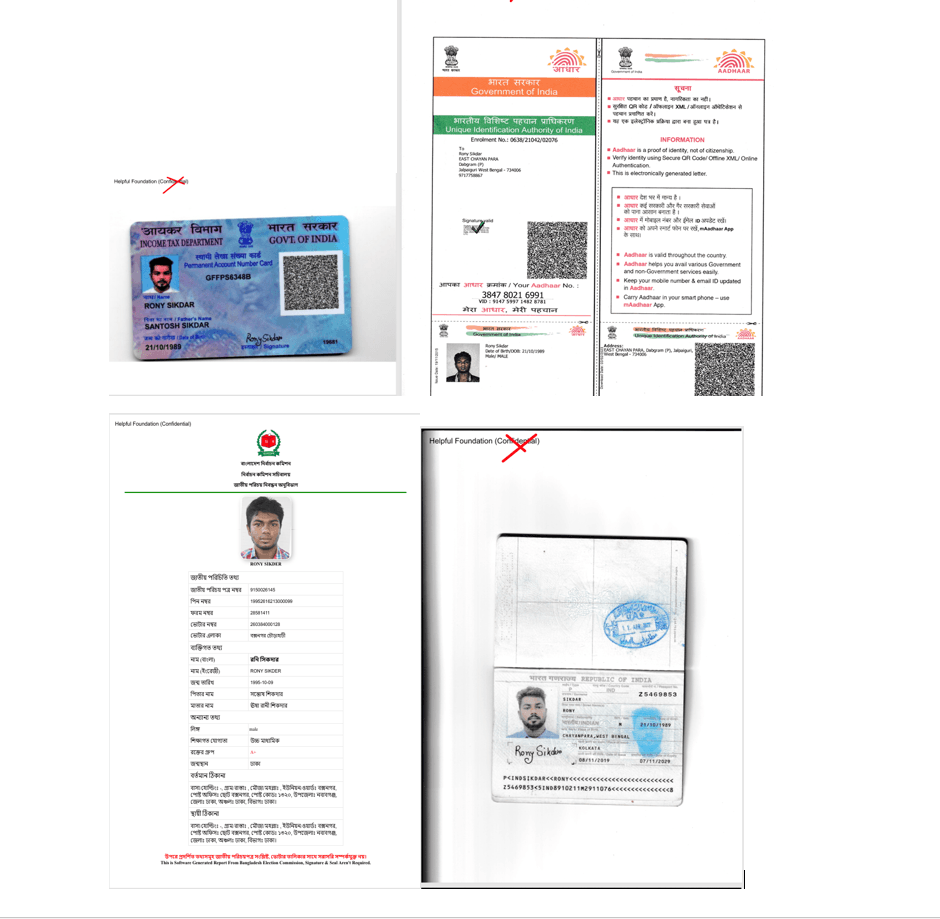
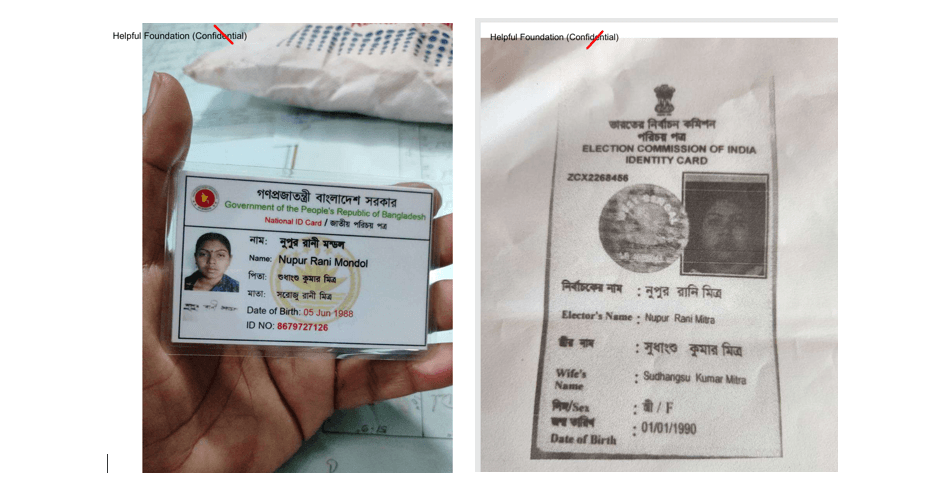
These cases represent only the tip of the iceberg. Our investigations indicate that thousands of similar cases exist across India’s border states.
CONCLUSION: A NATION AT RISK
Actions Required
- Mandatory 100% Verification: Implement mandatory verification of all visa applications and supporting documents
- Biometric Cross-Verification: Establish biometric cross-verification between Indian and Bangladeshi databases
- Criminal Prosecution: Initiate criminal proceedings against officials involved in document fraud syndicates
- Document Cancellation: Cancel all fraudulently obtained identity documents
- International Alerts: Issue international alerts to prevent misuse of fraudulent Indian passports
- Border Strengthening: Implement strengthened border monitoring and deportation protocols
Accountability Framework
| Action Item | Responsible Agency | Timeline | Success Metrics |
|---|---|---|---|
| 100% verification protocol | MEA, IVAC | 30 days | 100% verification rate |
| Biometric database integration | UIDAI, MEA | 90 days | Fully integrated system |
| Criminal investigation | CBI, IB | 60 days | Cases filed against officials |
| Document cancellation | RPOs nationwide | 120 days | 100% cancellation of fraudulent IDs |
| International alert system | MEA, Interpol | 60 days | Alerts issued to 190+ countries |
| Border strengthening | BSF, Home Ministry | Ongoing | 50% reduction in infiltration |
This isn’t just about document fraud—it’s about the very sovereignty of our nation. When foreign nationals can fraudulently obtain Indian passports and travel the world as Indian citizens, it tarnishes our nation’s reputation and compromises our security architecture.
The negligence we’re witnessing isn’t accidental—it’s a systemic failure that requires immediate intervention at the highest levels of government. The security of our nation depends on our ability to protect our borders, verify identities, and hold accountable those who enable infiltration
REPORT – Rohingya illegal immigrants
This report has been researched, analysed, and prepared by our strategic research partner, the Security Advisor and Research Organisation (SARO).
The Security Advisor and Research Organisation (SARO) is an independent intelligence, strategic research, and advisory organisation dedicated to advancing national security, resilience, and informed decision-making in an increasingly complex global security environment. Through evidence-based research, intelligence analysis, and strategic assessments, SARO supports governments, organisations, businesses, and stakeholders in understanding emerging risks, geopolitical developments, and security challenges.
Strategic Research Partner
Independent Intelligence • Strategic Research • Advisory Excellence