
High Cash Circulation in India: Legal, Financial & National Security Implications
🌐 HELPFUL FOUNDATION – OFFICIAL POLICY REPORT
🔷 Issued By
Helpful Foundation
Chairman: Dr. Ishtdev Sharma
📅 Date: 22 March 2026
🔶 1. Executive Summary
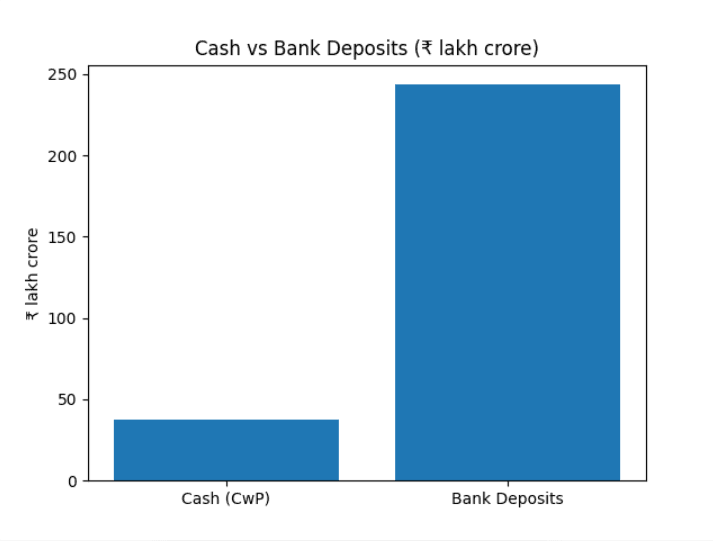
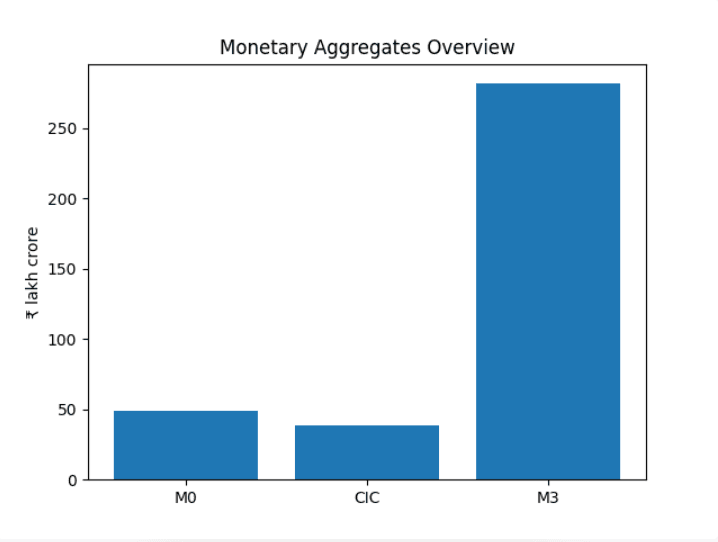
India is witnessing a significantly high level of physical cash circulation. As per official government data, currency with the public exceeds ₹37 lakh crore, while total currency in circulation is approximately ₹38 lakh crore (June 2025).
While cash remains essential for economic functioning, such elevated levels raise serious concerns regarding financial transparency, regulatory enforcement, and national security risks.
This report presents a structured legal and policy analysis of the issue.
🔶 2. Key Data Overview
- Currency with Public: ₹37.22 lakh crore
- Total Currency in Circulation: ₹38.20 lakh crore
- Annual Growth: Approx. 7–8%
- Source: Ministry of Finance (Rajya Sabha, 2025)
📊 Cash Growth Trend
(Insert Bar Chart Here – “Cash Growth Trend”)
Insight:
Cash circulation continues to rise annually despite policy efforts toward digital transactions, indicating a structural imbalance.
🔶 3. Legal & Regulatory Framework
The issue intersects with multiple statutory frameworks:
- Prevention of Money Laundering Act, 2002 (PMLA)
- Unlawful Activities (Prevention) Act, 1967 (UAPA)
- Income Tax Act, 1961
- Section 269ST (cash transaction limit)
- Section 40A(3) (cash expenditure restriction)
- Section 194N (TDS on cash withdrawal)
- Payment and Settlement Systems Act, 2007
Despite these provisions, the continued expansion of cash circulation suggests enforcement and compliance gaps.
🔶 4. Risk Analysis
🔐 4.1 Financial Opacity
Cash transactions lack traceability, enabling:
- Tax evasion
- Benami transactions
- Parallel economy growth
⚠️ 4.2 Money Laundering Exposure
High cash volumes facilitate:
- Placement and layering of illicit funds
- Reduced effectiveness of AML frameworks
🚨 4.3 Terror Financing & Illegal Networks
Cash-based systems are widely used in:
- Hawala operations
- Terror financing channels
This creates direct internal security risks.
🪙 4.4 Counterfeit Currency Threat
Higher circulation increases vulnerability to:
- Fake Indian Currency Notes (FICN)
- Cross-border economic disruption
⚖️ 4.5 Policy Contradiction
- Government promotes digital transactions
- Cash usage continues to grow
This reflects a gap between policy intent and ground reality.
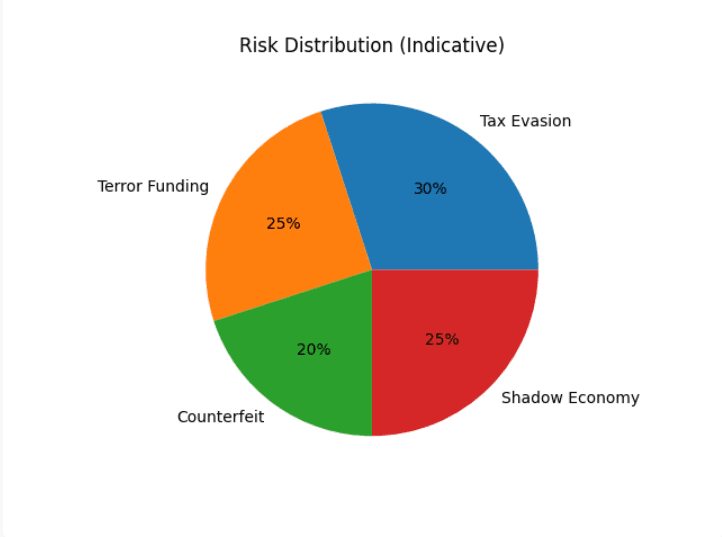
🔶 5. Structural Imbalance Visualization
(Insert Pie Chart Here – “Cash vs Digital Economy”)
Insight:
A high reliance on physical cash reduces financial visibility and limits enforcement efficiency.
🔶 6. National Security Implications
The persistence of a large cash-based ecosystem results in:
- Reduced financial surveillance capability
- Increased exposure to illicit financial flows
- Weak enforcement of AML and counter-terror frameworks
- Long-term risks to economic governance and internal stability
🔶 7. Recommendations
Helpful Foundation proposes the following:
✅ 1. High-Level National Review
Joint assessment by PMO, Ministry of Finance, RBI, and security agencies
✅ 2. Strengthened Enforcement
Improved implementation of PMLA, UAPA, and Income Tax provisions
✅ 3. Sector-Based Cash Audit
Identification of high-risk cash-intensive sectors
✅ 4. Financial Intelligence Enhancement
Deployment of real-time monitoring and data integration systems
✅ 5. Policy Alignment
Bridging the gap between digital initiatives and actual cash usage
✅ 6. White Paper Publication
Comprehensive government report on cash vs digital economy
🔶 8. Conclusion
The high level of cash circulation in India is not merely an economic phenomenon but a systemic issue with legal and national security implications.
A calibrated approach is required to balance financial inclusion with transparency, enforcement, and national security priorities.
🔷 About Helpful Foundation
Helpful Foundation is a public interest organization focused on:
- Legal awareness
- Policy advocacy
- Financial transparency
- National security issues
The Foundation works through structured legal interventions, research-based reporting, and institutional engagement.