
Interpol Red Notice Legal Consultation | Extradition Defence & Advisory
Confidential Legal Advisory for Interpol Red Notice & Extradition Matters
If you are facing concerns related to an Interpol Red Notice, extradition risk, or cross-border criminal allegations, timely legal guidance is critical. We provide independent and confidential legal consultation to help individuals understand Interpol procedures, assess risks, and explore lawful remedies under international and domestic legal frameworks.
Ask us about the Interpol Red Notice.

Click on the WhatsApp button for Legal Consultation

When it comes to international law enforcement, Interpol is the leading organisation with 195 member countries. It plays a crucial role in facilitating global police cooperation.
If you are seeking legal aid in Interpol Red Notice matters, we can guide you with a clear understanding of Interpol processes and assist you throughout — from the initial investigation to the final resolution of your case.
✅ How We Can Help
- Legal Aid & Representation for Red Notice cases.
- Challenging wrongful notices through Interpol’s Commission for the Control of Files (CCF).
- Guidance on extradition & asylum issues.
- Protecting your rights while ensuring compliance with international law.
What We Do
We understand that Interpol matters can be legally intricate and life-altering. Our Interpol Legal Aid Services are designed to support you at every step — from understanding your situation to advocating on your behalf.
Our Core Services
- Legal Aid & Representation for Red Notice Cases
Advice and strategic representation for individuals subject to or affected by an Interpol Red Notice. - Challenging Wrongful Notices
Assistance with applications and appeals to Interpol’s Commission for the Control of Files (CCF) to review and contest improper or abusive notices. - Extradition & Asylum Guidance
Legal counsel on extradition processes, rights protection, treaty obligations, and asylum options related to Interpol actions. - Rights Protection & Compliance
Ensuring that your legal rights are upheld while meeting international law and procedural requirements.
Comprehensive Assistance for INTERPOL Red Notice & International Legal Matters
Understanding Interpol Notices
Interpol notices are communication tools used between police and judicial authorities worldwide. While not arrest warrants, they are treated with high importance by member states.
Here is a summary of key notice types:
| Notice Type | Purpose | Who It Applies To | Key Features |
|---|---|---|---|
| Diffusion | Informal alert to request assistance | Individuals wanted by a country | Less formal than a Red Notice; not public |
| Red Notice |
Locate & provisionally arrest for extradition | Persons facing charges or criminal investigation | Widely recognised; not an arrest warrant but treated seriously |
 Blue Notice Blue Notice |
Collect information on identity, activities, or location | Suspects, witnesses, or those linked to crime | Helps track or identify people |
 Green Notice Green Notice |
Provide information on criminal activities that may threaten public safety | Known criminals, potential threats, missing persons | Shared globally for monitoring & interviews |
 Yellow Notice Yellow Notice |
Help locate or identify missing persons | Missing children, vulnerable adults, or unidentified individuals | Includes physical descriptions & aliases |
 Purple Notice Purple Notice |
Share info on criminal methods, tools, or techniques | Law enforcement agencies | Alerts police about new crime trends |
 Black Notice Black Notice |
Identify unknown deceased persons | Unidentified bodies | Assists in matching with missing persons database |
 Orange Notice Orange Notice |
Warn of dangerous items or events | Law enforcement & security agencies | Covers weapons, explosives, disguised devices |
 UN Special Notice UN Special Notice |
Circulate UN Security Council sanctions list | Persons/entities linked to terrorism or organized crime | Requires global compliance by member states |
Why Choose Our Interpol Legal Aid
Navigating Interpol procedures requires specialised legal insight into international law, extradition treaties, human rights protections, and global policing standards. Our team offers:
- Expertise in international criminal cooperation and notice systems
- Strategic legal support tailored to your case
- Protection of your civil and legal rights
- Clear guidance through complex administrative and judicial processes
How It Works
- Initial Consultation
Detailed review of your case, background, and relevant Interpol notices. - Case Strategy & Planning
Tailored plan that addresses legal options, defence strategies, and procedural next steps. - Execution & Representation
Active engagement with legal, administrative, and international bodies on your behalf. - Resolution & Follow-Up
Support until your matter is resolved and guidance for post-resolution compliance.
Get Expert Support Today
Whether you are challenging a notice, facing extradition questions, or seeking international legal guidance, Helpful Foundation is here to assist.
Contact us to schedule a consultation and begin your Interpol legal support journey.
Frequently Asked Questions (FAQs)
Interpol Legal Aid Services
1. What is INTERPOL?
INTERPOL (International Criminal Police Organization) is a global network that facilitates cooperation among law enforcement agencies of its 195 member countries. It does not arrest individuals or issue warrants; it only shares information and alerts between countries.
2. What is an Interpol Red Notice?
A Red Notice is a request circulated by Interpol to locate and provisionally arrest an individual pending extradition or similar legal action. It is not an international arrest warrant, but many countries treat it seriously under their domestic laws.
3. Can a Red Notice be challenged or removed?
Yes. A Red Notice can be challenged if it is politically motivated, issued without due process, violates human rights, or does not meet Interpol’s rules. Applications can be filed before Interpol’s Commission for the Control of Files (CCF).
4. How can Helpful Foundation assist in Red Notice matters?
Helpful Foundation provides legal guidance, documentation support, and strategic assistance for:
- Understanding the status and implications of a Red Notice
- Preparing representations and challenges
- Coordinating with legal professionals for international remedies
- Protecting individual rights during Interpol-related proceedings
5. What is the Commission for the Control of Files (CCF)?
The CCF is an independent body within Interpol that reviews complaints regarding personal data held by Interpol. It has the authority to recommend correction or deletion of Red Notices and other data.
6. Does a Red Notice mean automatic arrest in India?
No. Arrest depends on Indian domestic law, judicial oversight, and the existence of valid extradition requests. A Red Notice alone does not mandate arrest without legal procedures.
7. Can Interpol issue notices for civil or private disputes?
No. Interpol strictly prohibits involvement in matters of a political, military, religious, or racial character. Civil disputes, matrimonial conflicts, or commercial disagreements should not form the basis of Interpol notices.
8. What documents are required to review an Interpol case?
Typically required documents include:
- Passport and identity proof
- Case details or FIR information
- Court orders (if any)
- Copy or reference of the Interpol notice (if available)
- Chronology of events
9. Can a Red Notice affect travel or immigration?
Yes. A Red Notice may lead to immigration alerts, visa issues, detention at borders, or travel restrictions depending on the country’s laws and enforcement policies.
10. Does Helpful Foundation provide representation outside India?
Helpful Foundation provides legal aid coordination and guidance and works with appropriate legal channels and professionals, depending on jurisdiction. Direct court representation is subject to local legal requirements.
11. How long does the Red Notice review or removal process take?
The timeline varies depending on case complexity, documentation, and Interpol procedures. Reviews by the CCF may take several months.
12. Is consultation confidential?
Yes. All consultations and shared information are treated as confidential and handled in accordance with applicable legal and privacy standards.
13. How can I start the Interpol Legal Aid process?
You can initiate the process by contacting Helpful Foundation through the official website or WhatsApp legal consultation channel. An initial assessment will determine the appropriate legal pathway.
14. Does Helpful Foundation guarantee the removal of a Red Notice?
No ethical,legal service can guarantee outcomes. However, Helpful Foundation ensures proper legal evaluation, compliant procedures, and rights-based advocacy.
15. Who should seek Interpol Legal Aid?
- Individuals named in or affected by Interpol notices
- Persons facing extradition concerns
- Individuals wrongly implicated in international cases
- Families seeking clarity on cross-border legal issues
False / Misuse-Based Cases Leading to Red Corner Notice Issues
(Analytical & Referral Classification)
1. Matrimonial & Family Dispute Misuse
Common pattern
- False or exaggerated criminal allegations after marital breakdown
- Use of criminal machinery to pressure settlement
Typical allegations
- Dowry harassment
- Cruelty / domestic violence
- Criminal breach of trust
RCN issue
- FIR registered → accused moves abroad → complainant pushes police for RCN
- Often civil in nature, but escalated criminally
INTERPOL risk
- Violates INTERPOL’s ban on private or family disputes if not scrutinized
2. Business / Commercial Disputes Converted into Criminal Cases
Common pattern
- Failed partnership, investment loss, or contractual breach
- Criminal FIR filed instead of civil recovery
Typical allegations
- Cheating
- Criminal conspiracy
- Breach of trust
RCN issue
- Businessman travels internationally → local police seek RCN to compel return
Key problem
- Purely civil disputes presented as criminal offences
3. Loan Default / Financial Stress Cases
Common pattern
- Bank or private lender pressure
- FIR filed for recovery leverage
Typical allegations
- Cheating
- Misappropriation of funds
RCN misuse
- Default treated as criminal fraud without mens rea
INTERPOL relevance
- Financial disputes without criminal intent are not valid for RCN
4. Political or Personal Vendetta Cases
Common pattern
- Opposition figures, activists, or whistleblowers targeted
- Criminal cases revived or fabricated
RCN issue
- Used as an international pressure tool
Direct conflict with
- INTERPOL Constitution (Article 3 – prohibition of political cases)
5. Property & Inheritance Disputes
Common pattern
- Family or ancestral property conflicts
- A criminal FIR filed to gain a possession advantage
Typical allegations
- Forgery
- Criminal trespass
- Fraud
RCN misuse
- One party resides abroad → RCN requested to force appearance
6. False Cyber Crime / Online Allegations
Common pattern
- Business rivalry or personal revenge
- Misuse of cyber laws
Typical allegations
- Online fraud
- Identity misuse
- Cryptocurrency accusations
Issue
- Jurisdiction confusion + weak evidence → international escalation
7. Immigration / Visa-Linked False Cases
Common pattern
- FIR filed to block foreign travel or deportation
- Complaints timed with visa renewals
RCN angle
- Used to trigger immigration alerts internationally
8. Old / Dormant FIRs Reactivated After Foreign Travel
Common pattern
- FIR pending for years with no investigation
- Accused travels abroad → sudden RCN request
Red flag
- No charge sheet, no summons, no prior notice
Key Legal & INTERPOL Compliance Issues
- RCNs are not arrest warrants
- INTERPOL does not investigate crimes
- RCNs must meet:
- Serious ordinary-law crime threshold
- Non-political, non-civil, non-private dispute criteria
- Judicial backing and proportionality
Many RCN requests fail due to:
- Lack of judicial oversight
- Civil disputes dressed as criminal cases
- Absence of mens rea
- Abuse of process
How Helpful Foundation Uses This Classification
- Preliminary screening of referral cases
- Identification of potentially false or abusive RCN requests
- Referral to specialised international/constitutional legal experts
- Ensuring a facilitation-only role, no representation
Misuse of Interpol Red Notices
Legal Awareness & Rights Protection
INTERPOL operates under strict neutrality rules. A Red Notice is not an arrest warrant; it is a request for provisional arrest subject to domestic law. However, global experience shows that Red Notices are sometimes misused or wrongfully issued, leading to serious human-rights and due-process concerns.
This section is presented for public legal awareness, not to determine guilt or innocence.
When Red Notices Are Commonly Misused
1. Political or Dissident Targeting
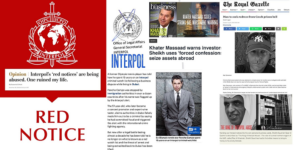
Red Notices are sometimes sought against political opponents, journalists, or activists under the guise of criminal charges. Such notices frequently violate Interpol’s constitutional ban on politically motivated cases and are later deleted after review.
2. Business & Commercial Disputes
Purely civil matters—loan defaults, shareholder disagreements, or contractual conflicts—are occasionally criminalised to exert pressure. Interpol rules prohibit using Red Notices for debt recovery or private disputes.
3. Matrimonial & Family Disputes
Divorce, maintenance, or family conflicts involving spouses abroad have been improperly escalated to international police channels. Family disputes do not meet Interpol’s seriousness threshold.
4. Refugees & Asylum Seekers
Individuals already granted refugee or asylum status have faced Red Notices from their home countries. Once protection status is established, such notices are commonly cancelled due to international human-rights obligations.
5. Lack of Judicial Due Process
Cases where:
- No arrest warrant exists
- No charge sheet or trial has begun
- Requests rely only on police allegations
are vulnerable to removal for lack of proportionality and due process.
6. Extradition-Barred Situations
When no extradition treaty exists or the alleged offence is non-extraditable, Red Notices are sometimes misused as indirect coercion—contrary to Interpol compliance standards.
How Wrongful Red Notices Are Addressed
Review Authority
The Commission for the Control of Files (CCF) is Interpol’s independent oversight body. It examines complaints and may order:
- Correction of data
- Suspension of access
- Complete deletion of a Red Notice
Legal Grounds for Cancellation or Deletion
- Political motivation (Article 3 violation)
- Civil or private dispute wrongly criminalised
- Absence of judicial backing
- Disproportionate enforcement
- Human-rights violations
- Recognised refugee or asylum status
Why Legal Awareness Matters
Misuse of Red Notices can result in:
- Arbitrary detention
- Travel bans and immigration blocks
- Passport and visa complications
- Reputational and financial harm
Early awareness and lawful remedies are essential.
NGO Compliance Disclaimer
Helpful Foundation does not determine criminal guilt or innocence. This content is provided solely for legal awareness and public education on international policing safeguards and rights-based remedies.